
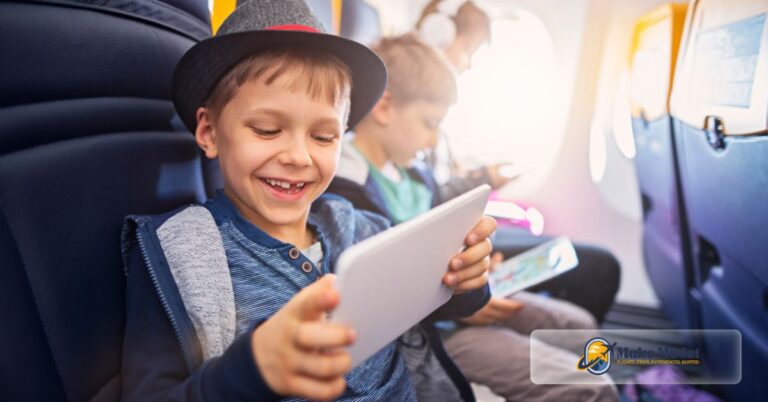
Long-haul flights with kids aren’t just about surviving the hours in the air — they’re about managing energy, expectations, and boredom before it turns into a full meltdown at 35,000 feet. The difference between a smooth flight and a stressful one usually comes down to preparation and pacing, not luck.
We’ve learned that keeping kids entertained isn’t about one magic trick. It’s about layering small things that buy you time — 20 minutes here, 40 minutes there — until suddenly you’re halfway through the flight and everyone’s still relatively calm.
Start With a Realistic Plan (Not Just a Bag of Toys)
It’s tempting to pack everything — books, games, snacks, screens — and hope something sticks. But kids don’t just need options; they need structure.
Break the flight into phases. Think of it like a loose schedule:
- Takeoff → something new and exciting
- Mid-flight → quieter activities
- After meals → screens or movies
- Last stretch → comfort and winding down
This pacing matters more than the actual activities. If you hand over everything in the first hour, you’ll run out of options fast.
We usually introduce one new thing every 30–60 minutes. Even something simple like a sticker book feels fresh if it’s timed right.
The “New = Interesting” Rule Always Works
Kids don’t need expensive entertainment — they need novelty.
A $2 toy they’ve never seen before will hold attention longer than their favorite thing from home. This is one of the easiest wins.
Pack a few small surprises:
- Cheap figurines
- Mini puzzles
- Activity books they haven’t opened yet
- Coloring supplies in a small pouch
Wrap them if you want to stretch the excitement further. Opening something mid-flight instantly resets attention.
This works especially well on longer routes like flights to Asia or transatlantic flights, where the time gap feels endless.
Screens Help — But Only If You Control Them
Tablets are useful, but they’re not a full solution.
If kids start watching cartoons right after takeoff, you’ve lost your strongest tool too early. Screens work best when you treat them as a “mid-flight anchor” — something to stabilize energy when attention starts slipping.
Download content in advance. Do not rely on airplane Wi-Fi.
We usually line up:
- One movie they’re excited about
- A few short shows
- One simple game
Headphones matter more than you think. Comfortable, kid-friendly ones avoid constant adjusting and complaints.
And don’t forget chargers or a power bank — nothing worse than a dead tablet three hours in.
Snacks Are Entertainment (Not Just Food)
Snacks buy time. Not just because kids are hungry, but because eating breaks boredom.
The trick is variety, not quantity.
Instead of one big snack, bring multiple small options:
- Cut fruit
- Crackers
- Small sandwiches
- Something slightly “treat-like”
We space snacks out across the flight. It becomes part of the rhythm — something to look forward to.
On longer family travel routes, this alone can fill a surprising amount of time.
Just avoid anything messy or overly sugary. You don’t want sticky hands and a sugar crash in a cramped seat.
Movement Breaks Make a Huge Difference
Kids aren’t designed to sit still for 8–12 hours. Expecting that will backfire.
Every couple of hours, let them:
- Stand up
- Stretch
- Walk a short loop down the aisle
Even a few minutes helps reset their mood.
We usually time this after meals or before introducing a new activity. It creates a natural transition.
Cabin crew are generally understanding as long as it’s done safely and not during turbulence or service.
This becomes especially important on longer long-haul flights, where restlessness builds over time.
Comfort Is Half the Battle
Entertainment works better when kids are comfortable.
Bring a few simple things:
- A small blanket or hoodie
- Neck pillow (if they tolerate it)
- A favorite soft toy
Sleeping on planes is unpredictable, but even partial rest helps.
If your child manages a nap, protect it. That’s your longest uninterrupted break.
We also try to align the flight with their usual sleep schedule when possible, especially for overnight routes.
Don’t Skip Travel Insurance — It Matters More With Kids
Flights get delayed, luggage goes missing, and kids get sick at the worst times. It’s not dramatic — it’s just reality.
For longer trips, especially with connections or multiple flights, we always check coverage before we go.
[WIDGET: Travelpayouts Travel Insurance]
The search above compares options quickly and shows what’s actually covered. With kids, things like medical support or cancellations become a lot more relevant than you’d think.
It’s one of those things you hope you won’t need, but you don’t want to figure it out mid-trip.
Keep Expectations Low (And That’s a Good Thing)
The goal isn’t a perfect flight. It’s a manageable one.
Kids will get bored. They’ll get restless. Something will go off-plan. That’s normal.
What helps is staying flexible:
- Switch activities sooner than planned
- Take breaks when needed
- Accept that not every moment needs to be “productive”
Some flights go surprisingly smoothly. Others feel long no matter what you do.
But with the right mix of preparation, pacing, and a bit of patience, long-haul travel with kids becomes something you can handle — not something you dread.