
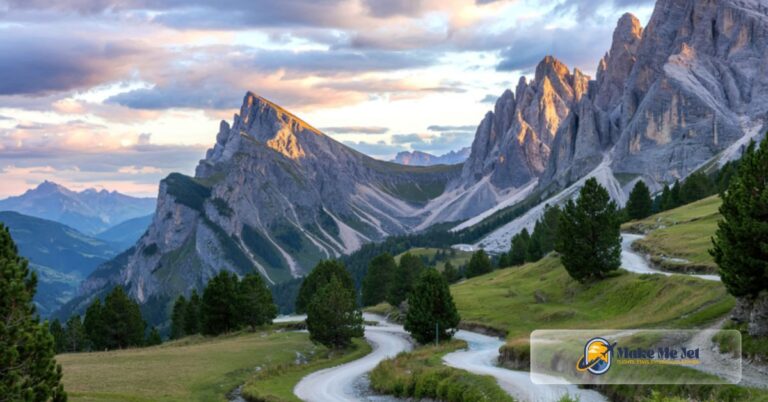
The first time we went hiking in the Alps, we underestimated how quickly things change once you leave the valley floor. A gentle path can turn into a steep, exposed climb within an hour, and what looked like a short route on the map suddenly becomes a full-day effort. That’s part of the appeal — but also the reason why choosing the right trail matters more here than almost anywhere else in Europe.
This isn’t a list of pretty walks. It’s a breakdown of some of the best Alpine trails, ranked by difficulty, so you can match your ability (and energy level) to the experience you actually want.
Easy Trails That Still Feel Like the Alps
Not every Alpine hike needs to be a test. Some of the best views come with surprisingly little effort, especially in areas where cable cars do most of the climbing for you.
One of the most accessible routes is the Panorama Trail above Zermatt in Switzerland. You take a lift up to Blauherd and follow a well-marked path toward Sunnegga. The trail is wide, mostly flat, and consistently gives you a clear view of the Matterhorn. It’s around 5 km and takes about 2 hours at a relaxed pace.
In Austria, the Seebensee hike near Ehrwald is another easy option. The path starts from a lift station and gradually climbs toward a lake that sits directly below the Zugspitze. The incline is manageable, and the payoff — a calm alpine lake with mountain reflections — feels like something much harder-earned.
These trails work well if you’re mixing hiking in the Alps with other travel plans. You don’t need special gear beyond decent shoes, and you’re never too far from a lift or a mountain restaurant if the weather turns.
Moderate Hikes That Require Some Effort
Once you step into moderate territory, the Alps start to feel bigger. The distances stretch out, the elevation gain becomes noticeable, and you need to think about pacing.
The Five Lakes Walk in Zermatt is a good example. It’s longer than the Panorama Trail, with gentle ups and downs across alpine terrain. The lakes themselves are the highlight, especially Stellisee, where the Matterhorn reflects clearly on a calm day. It’s not technically difficult, but at around 10 km, you’ll feel it by the end.
In Italy, the Tre Cime di Lavaredo loop in the Dolomites is one of the most popular moderate hikes. The trail circles the famous rock formations, offering changing views throughout. It’s around 10 km and can get crowded, especially in summer, but the path itself is straightforward.
For something quieter, the Lac Blanc hike in Chamonix, France, is worth considering. It’s shorter in distance but steeper in sections, with some rocky steps near the end. The view over the Mont Blanc massif makes the effort feel justified.
These hikes are where planning starts to matter more. You’ll want to check weather forecasts, carry water, and allow extra time for breaks — not because it’s hard, but because rushing in the Alps is rarely a good idea.
Challenging Trails That Push Your Limits
This is where Alpine hiking becomes serious. The trails are longer, steeper, and often exposed. You don’t need to be an expert climber, but you do need confidence on uneven terrain and a reasonable level of fitness.
The Haute Route section between Chamonix and Zermatt is a classic multi-day trek, but even short segments can be demanding. Expect long ascents, high passes, and changing weather conditions. It’s not something to attempt casually.
Another well-known route is the Eagle Walk (Adlerweg) in Austria, which stretches across Tyrol. Individual stages can be tackled as day hikes, but even those involve significant elevation gain and navigation through rugged terrain.
In the Dolomites, the Alta Via 1 offers a mix of challenging hiking with manageable logistics. The trail is well-marked, and mountain huts along the route make it possible to break the journey into sections. Still, the daily distances and elevation changes require preparation.
For these hikes, gear becomes more important. Proper boots, layers for changing weather, and a basic understanding of route planning are essential. It’s also where travel insurance starts to feel less optional and more like common sense.
For longer or higher-altitude hikes, we usually sort insurance in advance. It’s not exciting, but it’s one of those things you don’t want to think about once you’re already on the trail.
Expert-Level Routes for Experienced Hikers
Some Alpine routes move beyond hiking into something closer to mountaineering. These are not casual day trips, and they often require specific skills or guides.
The Tour du Mont Blanc is often listed as a challenging trek, but certain variants — especially those that skip easier sections — can become significantly more demanding. Long days, steep ascents, and unpredictable weather are standard.
More technical routes in the Dolomites include via ferrata paths, where you use fixed cables and ladders to navigate exposed rock faces. These are not hikes in the traditional sense, and you’ll need equipment like harnesses and helmets.
In Switzerland, routes around the Jungfrau region can involve glacier crossings and high-altitude passes. These are not marked in the same way as standard trails, and conditions can change quickly.
If you’re considering this level, it’s worth looking into guided options.
Guided tours in the Alps can range from simple day hikes to multi-day technical routes. For anything involving exposure or altitude, having someone who knows the terrain makes a noticeable difference.
How to Choose the Right Trail for Your Trip
Difficulty ratings in the Alps aren’t always standardized. A “moderate” hike in Austria might feel harder than a similar rating in France, depending on terrain and elevation gain.
The simplest way to choose is to think in terms of time and elevation, not just distance. A 6 km hike with 800 meters of ascent is very different from a flat 10 km walk.
It also helps to consider how the hike fits into your overall trip. If you’re traveling through Italy or Switzerland and only have a few days in the mountains, easier or moderate trails often make more sense. You’ll still get the views, without structuring your entire trip around a single hike.
Weather is another factor that changes everything. A trail that feels manageable in clear conditions can become risky in rain or fog. Always check forecasts and have a backup plan.
Finally, don’t underestimate how much time you’ll spend stopping. In the Alps, you rarely walk for long stretches without wanting to pause, take photos, or just look around. That slows everything down, but it’s also the point.
What We’d Tell a Friend
Start easier than you think you need to. The Alps don’t require extreme routes to feel impressive, and even short hikes can give you a full sense of the landscape.
If you enjoy it, you can always go further next time. There’s no shortage of trails, and each region — from Chamonix to the Dolomites — has its own version of what a “perfect hike” looks like.
The mistake most people make isn’t choosing a trail that’s too easy. It’s choosing one that turns the day into something they have to endure rather than enjoy.