
Rome doesn’t make choosing where to stay easy. Every neighborhood looks like the “right” one until you realize the city is bigger, louder, and more layered than it first appears. We’ve stayed in a few different areas over time, and the truth is simple: where you stay in Rome shapes your entire trip.
Some areas are perfect if you want to walk everywhere. Others are cheaper but require patience with public transport. A few feel like a movie set during the day and a ghost town at night. Here’s how to pick the right neighborhood based on how you actually travel — not just what looks good on a map.
Centro Storico: For First-Time Trips (and Zero Planning Stress)
If it’s your first time in Rome, staying in the historic center is the easiest decision you’ll make.
This is where everything is. The Pantheon, Piazza Navona, Trevi Fountain, and countless small streets that feel like they haven’t changed in 300 years. You’ll step outside and already be in the middle of it, which matters more than you think when you’re walking 20,000 steps a day.
The upside is obvious: you won’t waste time figuring out transport, and you can dip back to your hotel whenever you need a break. The downside is price. Rooms here are expensive for what you get, and “charming” often means small and slightly worn.
Noise can also be an issue. Restaurants and bars stay busy late, especially around the main squares.
Still, if you want a trip where you can wake up, grab coffee, and start exploring immediately without overthinking anything, this is the safest choice.
For places to stay, we usually check a mix of boutique hotels and apartments in this area — the search below pulls both and lets you filter by exact location.
Trastevere: For Atmosphere and Evenings That Matter
Across the river, Trastevere feels like a different version of the city. Narrow streets, laundry lines, small wine bars, and a steady buzz that doesn’t feel forced.
This is where evenings happen. After a day of walking through museums and ruins, coming back here actually feels like part of the experience rather than just a place to sleep.
It’s not the quietest area, though. Some streets stay lively late into the night, especially near Piazza di Santa Maria. If you’re a light sleeper, choosing the exact street matters more than the neighborhood itself.
In terms of location, it’s slightly removed from the main sights, but still walkable to most of them. Expect 20–30 minutes on foot to places like the Colosseum or Vatican City, depending on where you stay.
Prices sit in the middle range. You’ll find better value than the historic center, especially for apartments, but it’s not a “cheap” area anymore.
We’d pick Trastevere for a second trip, or for anyone who cares as much about evenings and food as sightseeing.
Prati & Vatican: For Clean, Calm, and Well-Connected
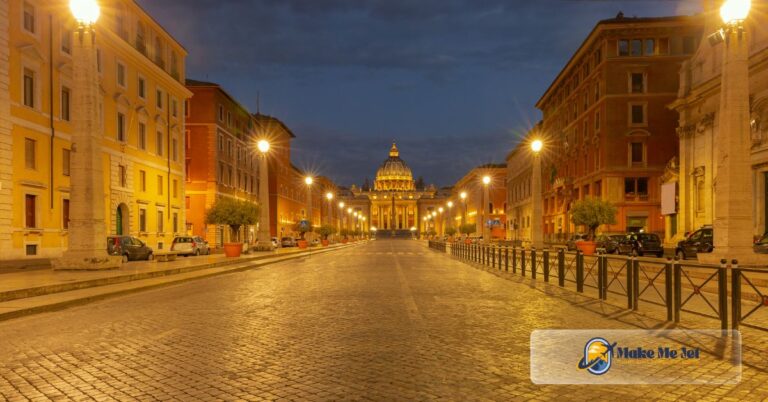
The area around Prati and the Vatican is often overlooked, which is exactly why it works so well.
Streets are wider, buildings are more modern (by Rome standards), and everything feels a bit more organized. It doesn’t have the same postcard look as the historic center, but it makes up for it in comfort.
You’re close to Vatican City, obviously, and the metro line here connects you quickly to other parts of the city. It’s one of the few areas in Rome where public transport actually feels straightforward.
Hotels tend to be better value for money — larger rooms, quieter surroundings, and less of the “you’re paying for location only” feeling.
The trade-off is atmosphere. You won’t step outside into a cinematic scene. You’ll walk a bit to get there.
Still, for a balanced trip — especially if you want decent sleep, easy access, and slightly lower prices — this area is hard to beat.
Monti: For Walkability Without the Crowds
Monti sits just next to the Colosseum, but feels more local than you’d expect given how central it is.
This is one of the best areas if you want to stay close to major sights without dealing with the constant crowds of the historic center. You can walk to the Roman Forum, Colosseum, and even back toward the center in under 20 minutes.
The neighborhood itself has a mix of small shops, casual restaurants, and a slightly creative, laid-back feel. It’s not as polished as Prati or as busy as Trastevere.
Prices vary a lot. You’ll find both high-end boutique stays and more reasonable apartments, depending on the exact street.
One thing to note: parts of Monti are on a hill. It’s not dramatic, but after a full day of walking, you’ll notice it.
We’ve found this area works well for people who want a central base without feeling like they’re constantly in the middle of tourist traffic.
Termini: For Budget Travelers Who Care About Price First
Let’s be honest about Termini. It’s not pretty. It’s not where you go for atmosphere. But it can make sense.
This is the area around Rome’s main train station, and it’s usually the cheapest place to stay within central Rome. You’ll find simple hotels, hostels, and budget apartments at prices that are hard to match elsewhere.
The biggest advantage is transport. You’re connected to everything — trains, metro lines, buses, and airport transfers. If you’re doing day trips or arriving late at night, this location is practical.
The downsides are clear. Some streets feel rough, especially late at night, and you won’t get that classic Rome feeling just by stepping outside.
But if your priority is budget travel and you plan to spend most of your time exploring rather than hanging around your hotel, it can work.
Just choose your accommodation carefully and check recent reviews — quality varies a lot here.
How to Choose Based on Your Trip Style
Picking a neighborhood in Rome comes down to what you value most.
If this is your first visit and you want everything easy, stay in Centro Storico. You’ll pay more, but you’ll save time and energy.
If evenings matter — wine, food, and atmosphere — go for Trastevere.
If you want something quieter and more practical, with better value hotels, Prati is a solid choice.
If you want to walk everywhere but avoid the busiest streets, Monti strikes a good balance.
And if you’re trying to keep costs down and don’t mind a less polished area, Termini does the job.
There isn’t one perfect answer. Rome isn’t that kind of city. But choosing the right base makes everything else — from how much you walk to how well you sleep — noticeably easier.
One Last Thing
No matter where you stay, you’ll probably end up walking more than expected. Distances look short on the map, but the city slows you down — in a good way.
For things like skip-the-line tickets, guided visits to the Colosseum, or small food tours, it’s worth booking in advance. Not because everything sells out instantly, but because it saves you from standing in line when you could be somewhere else.
We’ve found that mixing a few planned activities with plenty of unstructured time works best here. Rome doesn’t reward rushing. It rewards paying attention.